
Sport Psychologist , Vladimir Novkov
Sport psychology studies the connection between the mind, emotions, and physical performance. It helps athletes, coaches, and active individuals develop the focus, resilience, and confidence needed to achieve ambitious goals. In modern sport, the line between success and stagnation is increasingly drawn not by muscles, but by mental preparation.
If you’re looking for a sport psychologist or an online sport psychologist, you’ve come to the right place. On this page, you’ll learn how sport psychology works, what my approach is, and how we can start working together.
My Professional Profile
I am Vladimir Novkov , a personality, social, and sport psychologist with a Master’s degree in Social Psychology from Sofia University “Sv. Kliment Ohridski”.
I have over ten years of professional experience in psychology and motivation. As an ISSA-certified Elite Trainer, I have completed specializations in sport psychology, fitness, nutrition, and recovery, including training in Sport Psychology for Athlete Development in partnership with Barcelona Innovation Hub.
I have worked with athletes across various disciplines , from strength and combat sports to ultra-distance running. My approach is integrative: I combine evidence-based methods from psychology with a practical understanding of the physiology of sport.
In the Media
Who Is Sport Psychology For?
Working with a sport psychologist is not reserved only for elite athletes. Mental preparation is valuable for anyone who wants to get more out of their training and competitions:
- Competitive athletes , professionals and semi-professionals who want to close the gap between training form and competition performance. Many athletes train hard but don’t reach the same level in key moments , the reason is almost always mental;
- Recreational athletes and amateurs , runners, triathletes, CrossFit athletes, martial artists, and anyone for whom sport is more than a hobby. Even without medals, the pursuit of personal growth requires mental preparation;
- Coaches and teams , group work on communication, motivational climate, and leadership. A coach can significantly improve team performance when they understand the psychological dynamics;
- Active people in transition , athletes returning after injury, a long break, or loss of motivation. Coming back isn’t just physical , often the bigger barrier is in the mind;
- Young athletes , adolescents and children building a healthy relationship with competition and pressure. Early work with a psychologist prevents burnout and builds lasting motivation.
- Not an athlete? My approach works beyond sport too. See personal development consultations , for entrepreneurs, people in transition, and anyone seeking intentional change.
If you train regularly but feel that your potential remains unrealized due to internal barriers , sport psychology is the next step.
What Sport Psychology Is NOT
There are many misconceptions around sport psychology. Before we continue, let’s clear up the most common ones:
“Sport psychology is for people with problems.” No. Working with a sport psychologist doesn’t mean something is wrong with you. Quite the opposite , it’s an investment in your performance, just like investing in a coach, nutrition, or equipment. Most of my clients are functional, ambitious people who want to get better.
“I’ll lie on a couch and talk about my childhood.” Sport psychology is not psychoanalysis. Sessions are structured, goal-oriented, and include practical exercises , visualization, cognitive restructuring, inner dialogue work. They feel more like a training session for the mind than traditional therapy.
“One conversation and everything will be fine.” Mental skills are built through practice , just like physical ones. There is no magic phrase that will make you invincible. What there is, however, is a system of tools that over time become second nature. That’s precisely why I work with a structured program, not one-off meetings.
“A sport psychologist replaces the coach.” Absolutely not. I don’t provide training programs and I don’t interfere with technical preparation. My work complements the coach’s work , when the mind is prepared, the body follows more effectively. Ideally, the coach and the psychologist work together, each in their own domain.
If you recognize yourself in any of these misconceptions, you’re not alone. Most people who come to me have similar doubts at the start. What matters is what happens after the first session , and for most clients, the answer is: “Why didn’t I come sooner?”
Sport Psychologist, Psychotherapist, or Coach?
One of the most common questions is: “Who should I see?” The answer depends on what concerns you:
| Sport Psychologist | Psychotherapist | Coach | |
|---|---|---|---|
| Focus | Performance and potential | Mental health and pathology | Physical preparation |
| When | You want to perform better in sport | You have clinical symptoms (depression, panic attacks) | You need a training program |
| Approach | Mental conditioning, CBT, REBT, Stoicism, logotherapy, somatic awareness | Clinical therapy (various schools) | Periodization, load management, technique |
| Result | Better performance under pressure | Symptom relief | A stronger and faster body |
Sometimes the boundaries overlap. If during our work I determine that you need clinical help, I will refer you to an appropriate specialist. My role is clear: I work with potential, not pathology.
What Does Consulting Look Like?
Working with a sport psychologist is not clinical therapy but a process of Mental Conditioning. The goal is for the athlete to become more effective, resilient, and autonomous. Unlike psychotherapy, which addresses pathology, sport psychology works with potential , how to reach the level you know you can be at.
In my work, I use an integrative approach that combines proven methods: Cognitive-Behavioral Therapy (CBT) for identifying and changing negative thought patterns, Rational Emotive Behavior Therapy (REBT) for addressing irrational beliefs, Stoicism and logotherapy for meaning and focus on what’s controllable, and somatic awareness and mindfulness for stress recognition and emotional regulation.
Typical topics I work with include:
- Building and maintaining intrinsic motivation , when goals blur, training becomes mechanical, and the sense of purpose fades;
- Focus and concentration in competitive settings (Flow State) , the ability to shut out the noise and be fully present in the moment of performance;
- Managing competitive anxiety and self-criticism , working with the thoughts and emotions that interfere with execution under pressure;
- Rebuilding confidence after injuries , overcoming the fear of re-injury and gradually returning to full intensity;
- Balancing sport, work, and personal life , sustainable strategies that protect against burnout and maintain long-term engagement.
Consultations are conducted online via video call, which provides flexibility for clients from all over the world. In-person sessions in Sofia, Bulgaria are also available upon request.
How Does a Session Work?
The process is structured and specific. Here’s what to expect:
- Free Discovery Call , a 30-minute meeting where we discuss your goals and challenges. We assess whether my approach matches your needs.
- Profiling (Blueprint Assessment) , we explore your motivational style, thinking patterns under pressure, and social preferences in a sporting environment.
- Working on specific goals , each session (60 minutes) is focused on a specific problem or skill: from visualization techniques to cognitive restructuring of negative inner dialogue.
- Between-session practice , you receive assignments and exercises to apply in training and competitive settings. Mental skills are built through practice, not just conversation.
The average duration of work depends on the goals: some topics (such as pre-competition anxiety) can be addressed in 4–6 sessions, while deep transformation of the motivational model requires 12 or more weeks of systematic work. You set the pace , I provide the structure.
A Personality-Based Approach
No two athletes are the same. My work is built on the The Blueprint of the Athlete system , a framework that describes four key psychological dimensions:
1. Drive (Motivation) , what drives you: intrinsic satisfaction, external results, or a combination of both? Understanding the motivational source determines how we set goals and how you respond to failure.
2. Competitive Style , how do you behave under pressure? Some athletes thrive on adrenaline, others freeze. We work with your natural style rather than trying to change it.
3. Cognitive Approach , analytical or intuitive? Prone to overthinking or impulsiveness? We identify the cognitive patterns that help or hinder you.
4. Social Style , how you function in a team, how you receive feedback from your coach, and how you handle the expectations of those around you.
Understanding your own “athletic profile” allows for more precise training and recovery strategies, instead of relying on one-size-fits-all advice. That’s why two runners with identical physical abilities can have vastly different mental preparation needs , one struggles with motivation, the other with anxiety. Generic advice like “just believe in yourself” rarely works because it doesn’t account for the individual profile of the athlete.
Case Studies from My Practice
Every case is different, but certain patterns recur. Here are three examples from my practice that illustrate what the work looks like in action. Names and details have been changed for confidentiality.
Triathlete with Fear of Failure
Problem: A female athlete preparing for her first triathlon. Despite months of preparation, fear of failure paralyzed her , especially the swimming leg, where she felt outside her comfort zone. The closer the date got, the more impossible it seemed to show up at the start line.
Approach: We worked on identifying the “because” behind the fear , what did failure actually mean to her? It turned out the problem wasn’t physical preparation, but the belief “If I don’t perform well, it means I’m not enough.” We used cognitive restructuring to separate performance from self-worth, and practical Stoicism , focusing on effort, not outcome.
Result: She completed the triathlon. She didn’t win a medal , and that was precisely the victory. She discovered she could face something terrifying and do it anyway. She continues to train and has signed up for a second race.
Competitive Athlete After a Severe Injury
Problem: A sudden injury cut short the season of a competitive athlete at the peak of her form. Months of rehabilitation followed, along with chronic insomnia and a growing feeling that she would never return to her level. Catastrophic thinking (“My career is over”) replaced realistic assessment.
Approach: First, we addressed the insomnia , we established evening rituals and techniques for managing rumination (the obsessive repetition of negative thoughts). In parallel, we worked on cognitive distortions: she was predicting the future with absolute certainty, without any basis for it. We introduced a gradual return to training load with clear progress criteria , small, measurable steps instead of “getting fully back.”
Result: She restored her sleep within three weeks. She returned to training without the paralyzing fear of re-injury. The key moment was the realization that the injury was not an ending, but part of the athletic journey.
Coach Under Double Pressure
Problem: A coach and choreographer who simultaneously had to support her athletes while dealing with an accumulated personal crisis. The feeling of collapse , the inability to give to others when she herself was depleted , made her feel like a fraud.
Approach: We worked on distinguishing types of fatigue , physical, emotional, social. The key intervention was: “Be your own coach” , to apply to herself the same principles she gave her athletes. This included load management, planned rest, and clear boundaries between professional and personal roles.
Result: A new perspective on her own workload and a clear distinction between “I can’t” and “I don’t want to right now.” She restored her ability to be effective both for herself and for her athletes.
These case studies are not miracle stories , they are examples of concrete, step-by-step work with real problems. Every client comes with a different context, but the tools , cognitive restructuring, emotion management, practical Stoicism , are universally applicable.
Why Does Online Consulting Work?
Many of my clients are based in Bulgaria, but I also work with athletes from across Europe and around the world. The online format is not a compromise , it’s an advantage:
- Flexibility , the session fits into your training and work schedule, with no travel time;
- Accessibility , it doesn’t matter where you live. All you need is a stable internet connection;
- Comfort , many athletes share more freely when they’re in a familiar environment;
- Continuity , even during travel for camps and competitions, work continues without interruption.
Research confirms that online psychological consultations are just as effective as in-person ones, provided that the relationship between client and specialist is built on trust and structure. That’s why I offer consultations as an online sport psychologist to clients worldwide , without compromising on quality.
What Sports Do I Work With?
Sport psychology is applicable to every sport, because mental skills , focus, resilience under pressure, emotion management , are universal. I have experience with athletes from:
- Strength sports , weightlifting, powerlifting, bodybuilding;
- Combat sports , boxing, kickboxing, MMA, judo;
- Endurance sports , running, ultramarathon, triathlon, cycling;
- Tennis and individual sports , where the solitude of the court makes mental preparation decisive;
- CrossFit and functional fitness , pain threshold management, competitive strategy;
- Team sports , football, basketball, volleyball , working with group dynamics.
Regardless of the discipline, the approach is the same: understand what drives you, what holds you back, and how to build a system where you perform at your best when it matters most.
Working with Young Athletes
Working with young athletes (15–22 years) requires a different approach than working with adults, not because it’s easier , but because the stakes are higher in the long run.
Talented young athletes often face pressure that doesn’t come from within: parental expectations, coach demands, club competition, and social comparison. When a young athlete’s identity is entirely tied to results (“I’m only good when I win”), every defeat becomes a personal crisis.
In my work with young athletes, I focus on:
- Prevention of early burnout , recognizing the signals before a full collapse. The young athlete who “stops loving the sport” often hasn’t lost their passion , they’ve overloaded their nervous system;
- Healthy competitive thinking , striving to win without falling apart when you lose. The difference between ambition and perfectionism is critical at this age;
- Building identity beyond sport , the athlete who knows who they are off the field performs better on it;
- Managing environmental pressure , techniques for handling the expectations of others, without conflict and without self-sabotage.
The goal is not tomorrow’s medal , it’s a better athlete (and person) in the long run. Early work with a sport psychologist for young athletes is not a luxury , it’s prevention. If you’re a parent or coach of a young athlete and recognize some of these challenges, the Synergistic Protocol offers a structured approach adapted for adolescents.
What Clients Say
The best way to understand what working with a sport psychologist looks like is to hear from the people who have already experienced it. Here’s what some of my clients share:
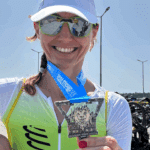
I worked with Vladi Novkov while preparing for my first triathlon. He helped me find my "why" beyond the paralyzing fear of water and my intense fear of failure. I recommend him to every amateur or professional athlete because he works professionally and in depth, not with the usual "you can do it, come on, you can do it."

Vladi and I have worked together several times. It usually happened after an accident or a sudden injury I was completely unprepared for mentally and took extremely hard. My first "encounter" with him, though, was after a long and almost chronic insomnia. After a few conversations, he gave me advice that I continue to follow years later. What I appreciate about him is that he never says "This has to happen no matter what, just get out of that hole..." and so on. He always approaches you carefully with advice tailored to your character, life, and environment. No demotivation, no stress. But there are questions like "Do you really need this? Is it necessary? Would you actually feel better or not?" And through these questions, we sifted out what truly mattered.

I found Vladimir Novkov at a very difficult time in my life. My father and my brother had passed away, my mother fell seriously ill, and I had to take care of her... That is when I felt it was becoming increasingly harder for me to cope with everything -- work and training included. Traditional psychologists did not offer me a solution, so I sought out a sport psychologist. That is when I found Vladimir Novkov. A specialist who is very accurate in his assessments and provides concrete solutions. That was the first time he told me that there are different types of fatigue... and how to overcome them. But as a coach and choreographer, I work a lot with the mental preparation of dancers, and what he told me somehow stuck in my mind as a motto: "Be your own coach\!" And yes... I had never thought that what I tell others, I could tell myself -- that I could help myself. I am very grateful for the different perspective he gave me, and I hope more people will try to find solutions for themselves together with him\!

Vladi's approach is comprehensive -- caring for your whole being: body and mind, work and rest, sleep and focus, nutrition and more. All of this is tailored to your habits, without forcing your rhythm of life, without needing to be superhuman to be healthy and in shape. There are so many small details he knows how to draw your attention to -- both delicately and decisively at the same time. Behind all of this stands his tremendous effort and knowledge, rich general culture, and detailed awareness on all matters related to the Human being.

I have known Vlado for over 15 years. Lately, I have been quite impressed by his new project to motivate others to lead a better and more active life. I was preparing for a triathlon competition, and by following his advice as a personal trainer, I managed to significantly improve my results. I wholeheartedly recommend his services to anyone who wants to change for the better.

Vladimir's professionalism inspired me to return to sport, to learn consistency, and to pursue my fitness goals. His solid, research-based knowledge is also a plus for every client's development. Even to this day, when training has become an integral part of my daily life, I rarely encounter coaches with such expertise and such genuine interest in the well-being of the people they train. I highly recommend him if you want to transform your training and nutrition culture. If I had to sum it all up: personalized attention and quality. Thank you, Vladi\!
Ethics and Standards
I work within the professional standards of the Bulgarian Psychological Society and the ethical code of ISSA. Confidentiality is guaranteed. My goal is not to create dependency, but to give you tools for independent coping. All shared information stays between us , it will not be disclosed to coaches, clubs, or third parties without your explicit consent.
How Do We Get Started?
I believe that lasting change requires a system, not one-off meetings. That’s why the primary format of work is the Synergistic Protocol™ , a 12-week program for mental and physical transformation.
Single consultation: 117 лв. (~€60)
60-min session focused on one specific problem.
Synergistic Protocol™ (12 weeks): €540
Full program with 6 sessions, chat support, and profiling.
The first step is a free discovery call or booking a Single Consultation directly.