
Study reviewed: Borrajo, E., Calvete, E., & Urquijo, I. (2024). Negative self-talk in runners: Emotional intelligence and perceived stress as explanatory factors. Psychology of Sport and Exercise, 70, 102545.
The runner’s inner monologue: A window into performance and well-being
Feet pounding the pavement or trail, breathing rhythmic — these are the familiar sounds that accompany runners during training and races. But beneath this typically lies a more peculiar story: the runner’s self-talk. Often spontaneous, this inner dialogue can influence the course of a race or a training session, for better or for worse.
In the decisive moments of a marathon or in the solitude of a training run, what runners tell themselves can shape the emotional landscape of their experience. Negative self-talk, which often leans pessimistic, can whisper about fatigue, doubt, and the temptation to quit.
This is a psychological obstacle that every runner faces, but what factors could explain why some fall victim to it while others seem to run on the wings of positive affirmations?
Let psychology come to the rescue! The scientists in the reviewed study of this mental phenomenon in runners shed light on how negative self-talk can be influenced by runners’ emotional intelligence and perceived stress. In the study, titled “Negative self-talk in runners: Emotional intelligence and perceived stress as explanatory factors,” the team delves into the spontaneous dialogues that take place in the minds of those who run on track, trail, or road.
A scientific look at the runner’s mind
The study involved 1,071 runners from various races held in the Basque Country, Spain. The scientists were curious about the thoughts passing through runners’ minds as they strived toward the finish line. More specifically, negative thoughts such as “I’m useless” or “I just can’t go on,” which can derail the emotional state and performance of a runner. The runners, aged 18 to 75, predominantly male, were at different stages of their careers, which contributed to the depth of the data.
To capture the nuances of their inner conversations, the researchers used a questionnaire capable of separating negative from positive self-talk. They attempted to establish emotional intelligence using the Wong-Law Emotional Intelligence Scale and measured perceived stress through the abbreviated version of the Perceived Stress Scale.
The connection between negativity, intelligence, and stress
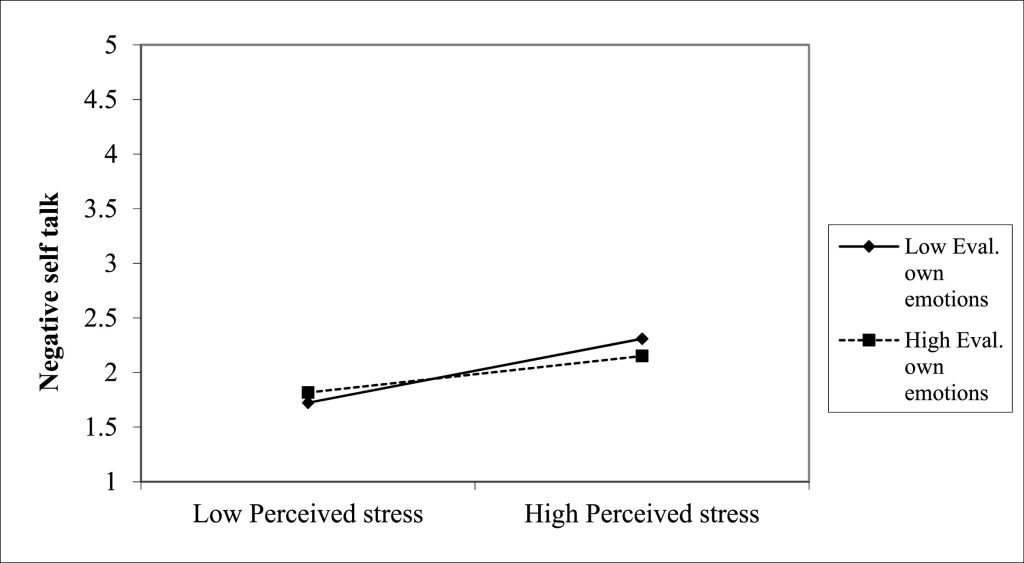
The data were analyzed using path analysis with robust statistical tools, revealing complex relationships between factors of emotional intelligence, stress, and self-talk. The numbers paint a picture of how stress affects runners’ self-talk and reveal how emotional intelligence can act as a shield against these negative mental threads.
The findings confirm the suspicions: higher perceived stress is indeed intertwined with an increased likelihood of negative self-talk. The human psyche, however, is more complex than that: the study also found that the ability to appraise one’s own emotions serves as a protective layer when stress levels rise, mitigating the volume of negative self-talk.
For those with higher emotional intelligence, the cacophony of doubts and self-evaluative ruminations was quieter. They had better emotional appraisal skills and may have been able to navigate stressful races with a clearer and more positive mindset.
The running mind: Emotional balance
Sometimes runners perceive their sport as a battle against the elements, the clock, or their own physical limitations, but an often-neglected front is the battle waged in the mind. The study, which sheds light on the effect of negative self-talk, draws attention to the interaction between internal emotions and external pressure. This knowledge can be of crucial importance for runners who want to optimize their performance, mental health, and overall running experience.
The understanding that emotional intelligence can protect against stress-induced negative self-talk calls for a more careful examination of this delicate balance. It is not just the thoughts and feelings during running that matter, but also the ability to manage them.
It is not simply a matter of “mind over matter,” but rather “mind with matter,” acknowledging the interconnection between emotional capabilities and the physical act of running.
The study presents a number of findings that can have real-world application for serious amateur runners:
Stress as a trigger: Just as physical triggers during a race or training can cause an increase in effort or a change in heart rate, emotional triggers, often stemming from one’s reaction to stress, can trigger a cascade of negative self-talk.
Emotional intelligence as a brake: Runners who refine their emotional intelligence appear better equipped to suppress the wave of negativity. It is not about silencing all inner dialogues, but about transforming potentially harmful thoughts into constructive ones.
Awareness and adjustment: Those who are aware that they recognize when negative self-talk begins, and are capable of adjusting their psychological state accordingly, are more likely to maintain focus and composure during a race or demanding run.
Some practical guidelines
- Build emotional awareness: Start observing your inner dialogue during running and training. Recognize the patterns of negativity that may appear when you are under stress.
- Learn emotion regulation techniques: Techniques such as deep breathing, mindfulness, and visualization can help you cope with stress and change negative self-talk in real time.
- Practice self-compassion: Replace self-critical talk with self-compassion. Understand that setbacks and difficulties are natural aspects of running and growth.
- Pre-race preparation: Prepare for the emotional demands of racing just as you do for the physical ones. Anticipate stressful moments and plan your mental coping strategies.
- Set realistic goals: Align your goals with your experience and fitness level to minimize the stress generated by a mismatch between expectations and reality.
- Acknowledge external stressors: Be aware of factors outside of running that contribute to stress levels, as they can indirectly influence your performance and self-confidence.
- Feedback and reflection: After races and hard training sessions, reflect on your stress reactions and self-analysis. Use this feedback to adapt and strategize for future runs.
- Seek support: Do not hesitate to discuss running-related stress with fellow runners, coaches, or sport psychologists who can offer advice and coping strategies.
- Train the mind: While you train your body through miles and exercises, do not forget to train your mind as well. Include mental strength exercises in your routine.
Conclusion
The study of the connection between negative self-talk, emotional intelligence, and stress in runners highlights the importance of a multifaceted approach to athletic performance, where psychological factors are on equal footing with physical achievements.
The runner’s inner dialogue is not just background noise — it has a significant influence on stress levels and overall performance.
Psychological training should be an integral part of an athlete’s regimen, addressing the ability to recognize and regulate emotional responses.
Periodic assessment of a runner’s emotional intelligence can help develop individualized training plans and interventions aimed at stress management.